About Jayhawk Fine Chemicals

Jayhawk Fine Chemicals Corporation, acquired by Anupam Rasayan India Ltd. in early 2026, is a leading custom manufacturer of starting materials, active ingredients, and advanced intermediates for the aerospace, agrochemical, electronics, pharmaceutical, and industrial market segments.

Dianhydride Selection in Colorless Polyimides

2026-09-16T15:23:37+00:00

Colorless polyimides (CPIs) are evolving for flexible-display substrates and cover films because they combine the low weight and flexibility of plastics with the thermal and chemical resistance required for electronic device fabrication. Their primary limitation is that conventional aromatic polyimides tend to be yellow or brown. This coloration results largely from charge-transfer interactions between electron-donating diamine segments and electron-accepting aromatic imide structures, which absorb light in the visible region[1]. Many CPI formulations begin with an [...]

Dianhydride Selection in Colorless Polyimides2026-09-16T15:23:37+00:00

Processing Dianhydrides: Challenges, Solutions, and Best Practices

2026-09-16T15:09:17+00:00

Dianhydrides are the cornerstone of polyimide chemistry, serving as essential co-monomers that, when reacted with diamines, yield some of the most thermally and chemically robust polymers known. However, their processing is far from straightforward. Polyimide synthesis demands meticulous control over reaction conditions, material handling, and intermediate management. For chemists and engineers working in high-performance polymers, understanding the nuances of dianhydride processing is not just advantageous, it is critical to achieving consistent, high-quality results. One of [...]

Processing Dianhydrides: Challenges, Solutions, and Best Practices2026-09-16T15:09:17+00:00

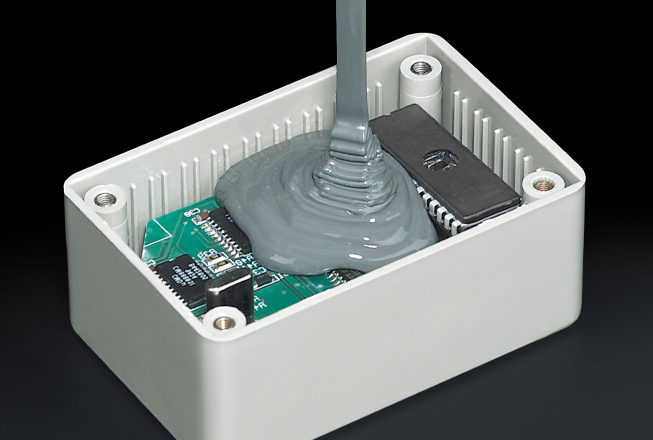
Dianhydrides vs Dicyandiamide in Epoxy Potting Compounds

2026-07-23T19:56:14+00:00

Epoxy potting compounds are essential in protecting sensitive electronic components, power modules, and optical assemblies from mechanical stress, moisture, and thermal cycling. Most commercial potting systems are based on Diglycidyl Ether of Bisphenol A (DGEBA) resins with a combination of fillers, catalysts, and thermal curatives. The choice of curative has a profound impact on both the processing window and the long‑term performance in service. Among the options available, dianhydrides such as 3,3′,4,4′‑Benzophenonetetracarboxylic dianhydride (BTDA®) offer [...]

Dianhydrides vs Dicyandiamide in Epoxy Potting Compounds2026-07-23T19:56:14+00:00

Epoxies, Tougheners, and Thermal Curatives: Finding the Balance

2026-06-15T18:06:23+00:00

Epoxy resins are widely used in structural, electrical, and protective applications because they offer strong adhesion, chemical resistance, and thermal stability. Yet many epoxy systems are inherently brittle, especially when cured with high-temperature thermal curatives. For that reason, toughening agents are often added to create a better balance between toughness and heat resistance. Kaneka's KANE ACE™, for example, is marketed as a liquid impact modifier that improves fracture toughness and endurance without losing heat resistance, [...]

Epoxies, Tougheners, and Thermal Curatives: Finding the Balance2026-06-15T18:06:23+00:00

EU PFAS Policy and its Impact on 6FDA

2026-06-03T16:19:11+00:00

Relaxation (or clarification) of EU PFAS policy has reopened commercial and technical interest in high‑performance polyimides, particularly 6FDA‑based systems, by removing some regulatory uncertainty that had stalled development programs and supplier engagement. For several years firms delayed or slowed work on fluorinated polymers because of the wide‑scope ECHA PFAS restriction proposals and the risk of downstream market disruption; clearer regulatory signals now encourage materials teams to re‑evaluate 6FDA polyimides for demanding electronics and composite [...]

EU PFAS Policy and its Impact on 6FDA2026-06-03T16:19:11+00:00
Go to Top