Dianhydride selection is a central design decision for polyimide fibers used in separation membranes. Together with diamine comonomers, dianhydrides control chain rigidity, molecular packing, fractional free volume, thermal behavior, solvent compatibility, and resistance to pressure and chemical exposure. These properties determine whether a polyimide can be spun into a defect-free hollow fiber or porous nonwoven and whether the resulting membrane provides the required permeability, selectivity, and service life. Polyimide membranes are especially promising because they combine strong gas-separation performance with high thermal and chemical stability[1].
For hollow-fiber gas-separation membranes, the polymer must meet two requirements. Its polyamic-acid precursor needs appropriate solubility, viscosity, and phase-inversion behavior to form a uniform fiber with a thin selective skin and porous support. After imidization, the polymer must allow the preferred gas to diffuse rapidly while restricting the competing gas. Dianhydride structure influences both fiber formation and gas transport.
Rigid aromatic dianhydrides, including Pyromellitic dianhydride (PMDA) and Biphenyl tetracarboxylic dianhydride (BPDA), generally produce stiff chains, high glass transition temperatures, and strong dimensional stability. These properties help fibers maintain geometry under heat and pressure. However, highly rigid structures can also pack tightly, reducing permeability, while lower precursor solubility may complicate dope preparation and spinning. Therefore, maximum heat resistance is not automatically the best membrane design target.
More flexible dianhydrides provide useful processing latitude. Ether-containing Oxydiphthalic anhydride (ODPA) introduces rotational freedom that can improve solubility and facilitate spinning-dope preparation. Benzophenone tetracarboxylic dianhydride (BTDA®) provides a different balance of rigidity, packing, and accessible free volume. Changing only the dianhydride can materially alter separation performance for gas pairs such as CO2/CH4, CO2/N2, and N2/CH4. In a comparative study using the same fluorinated diamine, the BTDA-derived polyimide outperformed PMDA- and ODPA-based analogues in several gas-separation tests[2].
The core design challenge is the permeability/selectivity trade-off. Greater free volume can raise gas permeability, but overly open chain packing can weaken molecular discrimination. Dianhydride structure helps set the size, distribution, and stability of free-volume elements in the fiber’s selective layer. Rigid segments can support selectivity, while contorted, asymmetric, or fluorinated structures may increase permeability. Copolyimide design can combine these attributes while preserving practical fiber-forming behavior.
Dianhydride selection also affects durability in commercial streams. Natural gas upgrading, biogas purification, hydrogen recovery, and carbon capture service can expose membranes to high pressure, condensable hydrocarbons, water vapor, acid gases, and thermal cycling. Polyimides may undergo physical aging, plasticization by CO2 or other sorbable components, swelling, and consequent loss of selectivity. Higher rigidity structures can help limit chain relaxation, while crosslinking, thermal rearrangement, blending, and mixed-matrix approaches are additional strategies to improve anti-aging and anti-plasticization performance[1, 3].
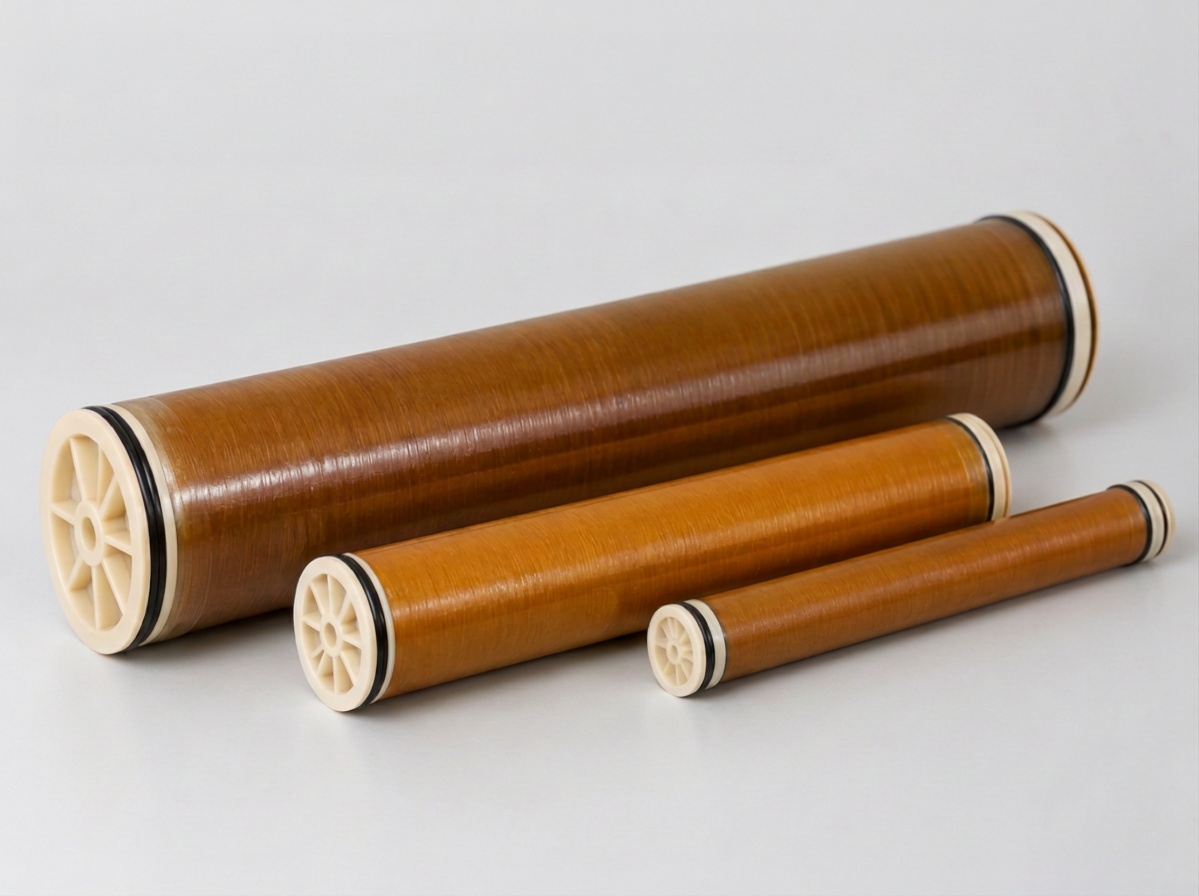
Polyimide fibers also serve in porous membrane formats for liquid, particulate, and harsh-environment separations. In these applications, the priority may shift from intrinsic gas transport to fiber strength, pore retention, chemical resistance, and thermal shrinkage control. Nonwoven or porous polyimide fiber media can support hot gas filtration, solvent-resistant filtration, battery separators, and composite membrane structures.
For membrane manufacturers, dianhydrides are molecular design tools rather than interchangeable raw materials. They govern precursor processability, fiber morphology, transport properties, and stability in operation. Suppliers that provide consistently high-purity dianhydrides, a range of rigid and flexible structures, and application-focused technical support can help membrane developers improve both manufacturability and separation economics.
Contact your Jayhawk Fine Chemicals representative for support with your next project.
Image: Shutterstock