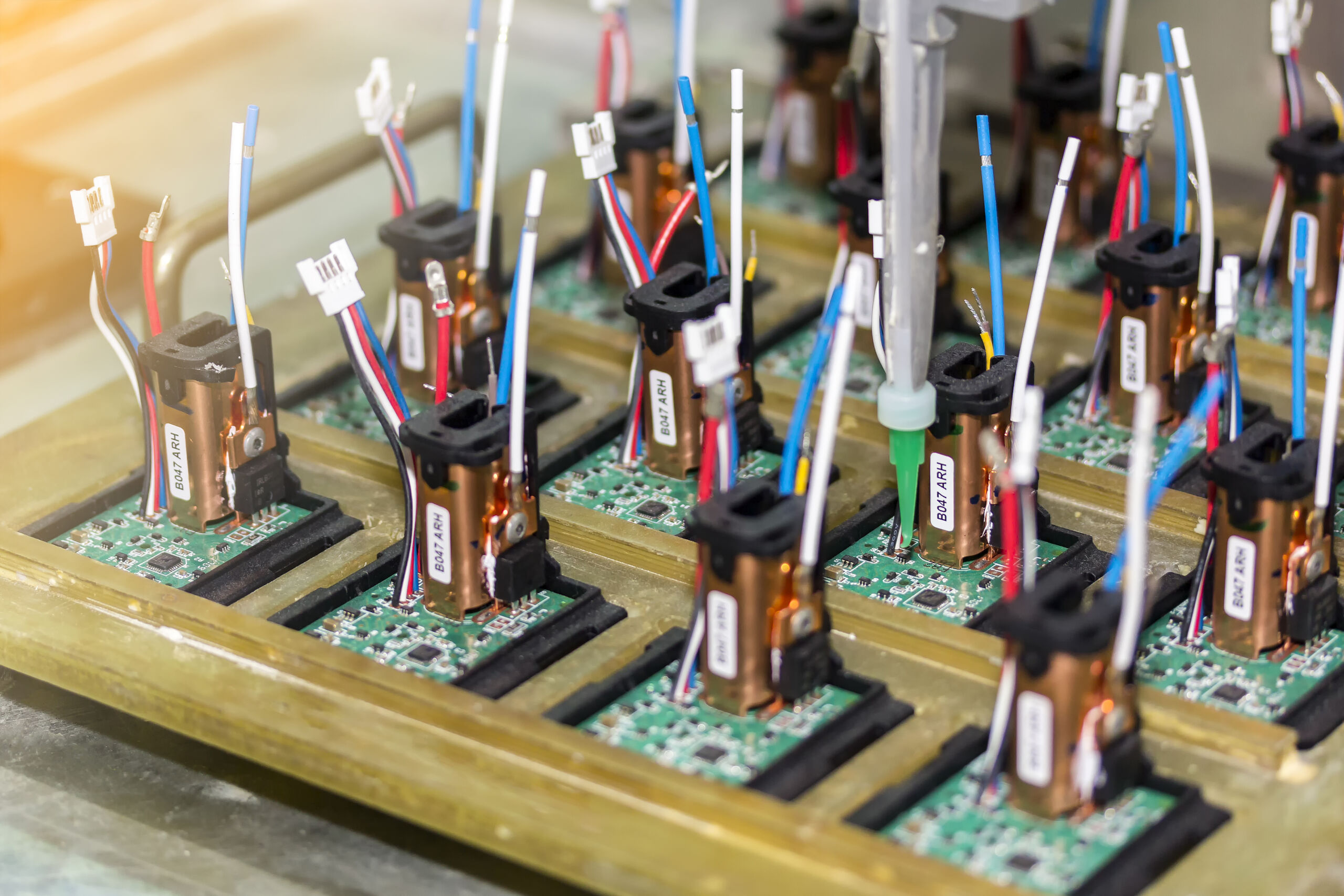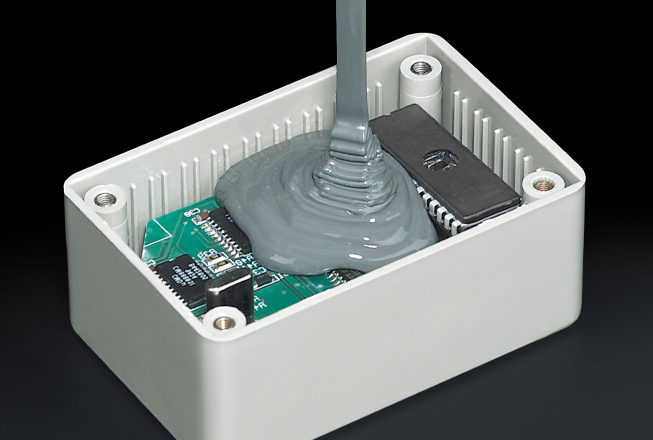
Epoxy potting compounds are essential in protecting sensitive electronic components, power modules, and optical assemblies from mechanical stress, moisture, and thermal cycling. Most commercial potting systems are based on Diglycidyl Ether of Bisphenol A (DGEBA) resins with a combination of fillers, catalysts, and thermal curatives. The choice of curative has a profound impact on both the processing window and the long‑term performance in service. Among the options available, dianhydrides such as 3,3′,4,4′‑Benzophenonetetracarboxylic dianhydride (BTDA®) offer distinct advantages over Dicyandiamide (DICY), particularly when high thermal stability, low moisture sensitivity, and robust mechanical properties are required[1].
DICY is relatively inexpensive and widely used in DGEBA epoxy potting compounds. However, DICY has a relatively high melting point and a restricted reactivity profile that can lead to slower cure kinetics and higher residual exotherm peaks when used in thick sections. In practice, this means longer post‑cure cycles, tighter thermal control, and a greater risk of internal stresses in larger castings. DICY can also hydrolyze in the presence of moisture, altering stoichiometry[2].
BTDA does not react directly with epoxy groups, but rather through a more controlled and thermally stable mechanism. Its reactivity is lower at room temperature but increases steadily with temperature, giving a broader and more predictable processing window. This allows formulators to design potting compounds that remain stable during storage and handling but cure efficiently under controlled thermal conditions. The exotherm of BTDA‑based systems is generally more moderate, which lowers the risk of thermal runaway in thick potting sections and improves dimensional stability during cure. Note that moisture sensitivity is also an issue for BTDA[3, 4].
Once cured, DGEBA/BTDA systems exhibit superior thermal performance compared with DGEBA/DICY systems. The dianhydride structure forms a more rigid, highly crosslinked network with higher glass transition temperatures (Tg) and better resistance to thermal degradation. BTDA can achieve Tg values beyond 200 °C in DGEBA formulations, whereas DICY typically reaches 120 °C under comparable conditions. This translates into potting compounds that can sustain higher operating temperatures without significant softening or loss of mechanical integrity. In power electronics and high‑temperature environments, this improved thermal stability reduces the risk of delamination, cracking, or softening under repeated thermal cycling[1].
Mechanically, DGEBA/BTDA epoxies tend to have higher modulus and better long‑term fatigue resistance. The anhydride-derived network is less prone to hydrolytic degradation, which is critical in humid or corrosive environments where DICY systems can suffer from gradual loss of strength and adhesion. Moisture uptake is typically lower in BTDA systems, and the resulting reduction in plasticization helps maintain consistent dielectric properties and mechanical performance over time. For optical assemblies and precision components, this translates to less distortion and better long‑term stability of the encapsulated sensor, etc.
For DGEBA epoxy potting compounds, switching from DICY to a dianhydride such as BTDA provides a more predictable cure profile, reduced sensitivity to moisture, and improved thermal and mechanical performance in service. While BTDA may have a higher price point and require careful formulating to manage viscosity and cure kinetics, the benefits in terms of process reliability, reduced internal stresses, and enhanced long‑term stability make it a compelling choice for high‑performance applications. In environments where thermal cycling, moisture exposure, and mechanical reliability are critical, BTDA offers a more robust and durable solution than DICY, without requiring exotic resin systems beyond standard DGEBA.
Contact your Jayhawk Fine Chemicals representative with questions on epoxy potting compound curative selection.
Image: Electronic Coating Technologies